
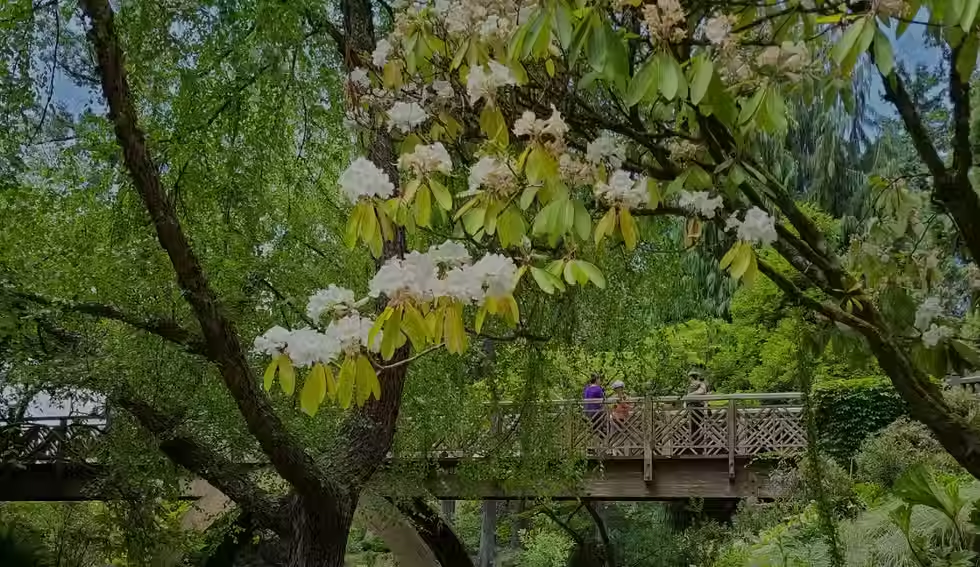
Crystal Springs Rhododendron Garden
The Rundown
Spoon Rating:
1
Distance:
0.5 miles
Elevation Change:
25 ft.
Typical Surface:
Paved, wood, packed pea gravel
Typical Width:
4 ft
Nearest Town:
Portland, OR.
Cell Phone Reception:
Excellent
Amenities:
Restrooms, potable water, accessible parking, benches. Pets are allowed on leash
Special Notes:
There is no fully wheelchair accessible path to the restrooms, and the porta potty is difficult to access
Why go?
The 9.5 acre garden has over a mile of trails and paths that can completed in a variety of loops; all are generally accessible, but only about 0.5 mile are wheelchair accessible. This nature oasis in the city is home to an incredible display of rhododendron and azalea which bloom in late spring – early summer, but there is much to appreciate year-round. It is a prime spot for birds and wildlife, there is a spring-fed lake with a fountain, three waterfalls, and many benches to rest and enjoy the beauty. It is a wonderful spot to get out and explore your comfort level with being outdoors, or to just enjoy on a low-spoon day.
The Hike
The entrance station is located about 50 feet from the accessible parking spots. The check-in window is at 36 inches - currently, the entrance fee is $9 unless you qualify for the Community Access Program; see below for information. Beyond the entrance, a concrete path leads downhill with grades of 2-8%, to a large landing with a bench before curving right and continuing on a generally 5% decline to a low rock wall and bench with plenty of space to gather.
From here, if you go left you will take another decline to a waterfall and a pond. This path is steep at over 10% grade with some cracking asphalt. It then curves right, crosses a short wooden footbridge with edge guards, and then takes a 5-8% incline and connects with the main path on the other side of the high bridge.
For the most wheelchair accessible route, I recommend continuing straight from the rock bench and gathering area. Cross the "High Bridge." This wooden bridge is level and with stable but slightly bumpy boards with a maximum ¾” gap.
After this bridge the path continues paved with 2-6% grades. It curves to the right, passing underneath rhododendron, then curves to the left again before crossing evenly onto an 8-foot long section of slightly loose pea gravel then returning to a paved surface. 1/10 mile from the entrance, you arrive at the large main bridge over the lake.

A portion of the ADA accessible ramp from the entrance. There are handrails and stone wall barriers.
The "Low Bridge" is approximately 1/10 mile long, with several pull-outs and observations spots over the lake. There are also benches on either side to sit and rest. An interpretative sign describes some of the birds and wildlife you may see. There is no shade over the bridge, so bring sun protection if you plan to linger here. The bridge has several rotting boards with holes up to 2 inches deep and 1-2 inches wide, but you can navigate around them if it isn't busy. There is a 1-2 inch threshold on the other wise of the bridge as it transitions to gravel.
Beyond the bridge, the path becomes firm, compact pea gravel and makes a variety of loops around the "Island" and the Meadow. While these paths generally level, wheelchair users should proceed with caution due to some steep grades, cross slopes, and roots. The most accessible route is to continue forward following the water, past the first path on the left which rises steeply at a 14% incline. There is then a steep 6-7% cross slope, sloping toward the lake with no edge guard, so be careful if you are using a wheelchair. Take the third path curving to the left and then go right towards the grassy area following the sign to the restroom.
The restroom has one all user accessible stall. The sink has a push button activation next to the faucet that may be difficult to reach. There are also gendered restrooms. The most accessible path back from the restrooms is to retrace the way you came. The other paths across the Island and meadow have short sections of 8-10% grade, but they are worth exploring if you can.
.jpg)
The main bridge over the lake. The photo shows several rotten boards with gaps. A small dog stands across them for perspective.

A gravel path with a steep cross slope next to the lake. A digital level is placed on the path, reading 6.3%.
Another wheelchair accessible option is the Peninsula and Woodland Garden. After the High Bridge (the first bridge when you enter the garden), take the first gravel path on the right. The trail forks - stay to the right. Several trails connect both sides of the loop. I recommend taking the last one before the trail curves sharply right - there is a 10% grade at the curve in the loop. There are some views of the Lagoon and Fern Wall from here. Unfortunately, the only access to that area is via stairs or a steep trail.
Trail Map

Map of the Garden with the most accessible routes highlighted.
Finding the Trailhead
Hours:
General admission fee is $9 for adults, $8 for seniors, $6 for youth (6-18) and free for children five and under. Community Access Program that is pay-what-you-wish 7 days a week with an Oregon Trail Card/SNAP EBT, WIC, TANF, REF/RCA, or TriMet Honored Citizen card. Annual passes are available.
Getting There:
Address: 5801 SE 28th Avenue, Portland, Oregon near Reed College at the intersection of SE 28th Ave and SE Woodstock Blvd. This is a well-established neighborhood in the heart of southeast Portland.
Parking: A paved parking area has two accessible parking spots and space for approximately 30 vehicles. If the parking lot is full, street parking is available in the adjacent neighborhood, but you may need to travel across some hills.
Public Transit: The closest Trimet bus stops are 6400 (Westbound Bus 19) and 7286 (Eastbound Bus 19) approximately 1 block away. Bus route 19 is accessible from the Orange Line.
Land
Acknowledgement:
This is the traditional territory of the Clackamas Chinook and others whose lands are now a part of the Confederated Tribes of Grand Ronde Treaty Areas. Much of the Willamette Valley was ceded in the 1855 Treaty with the Confederated Tribes of the Willamette Valley. The people of the Willamette valley were forced to march to the Grand Ronde Reservation. The Grand Ronde Tribe’s federal recognition was later terminated in 1954 until 1983, when the Tribe won restoration and regained a small portion of their homelands.
Pass/Entry Fee:
Please refer to the Garden's website for current information. Operating hours vary by the season.